


- Регистрация
- 17 Февраль 2018
- Сообщения
- 40 948
- Лучшие ответы
- 0
- Реакции
- 0
- Баллы
- 8 093
Offline
The company is closer to increasing its Vulcan launch cadence, but it won’t happen this year.
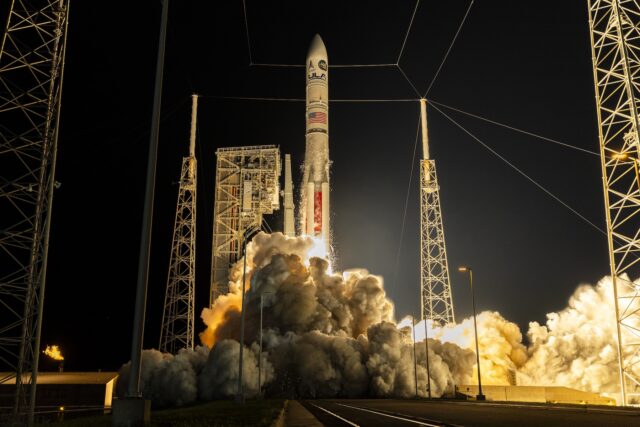
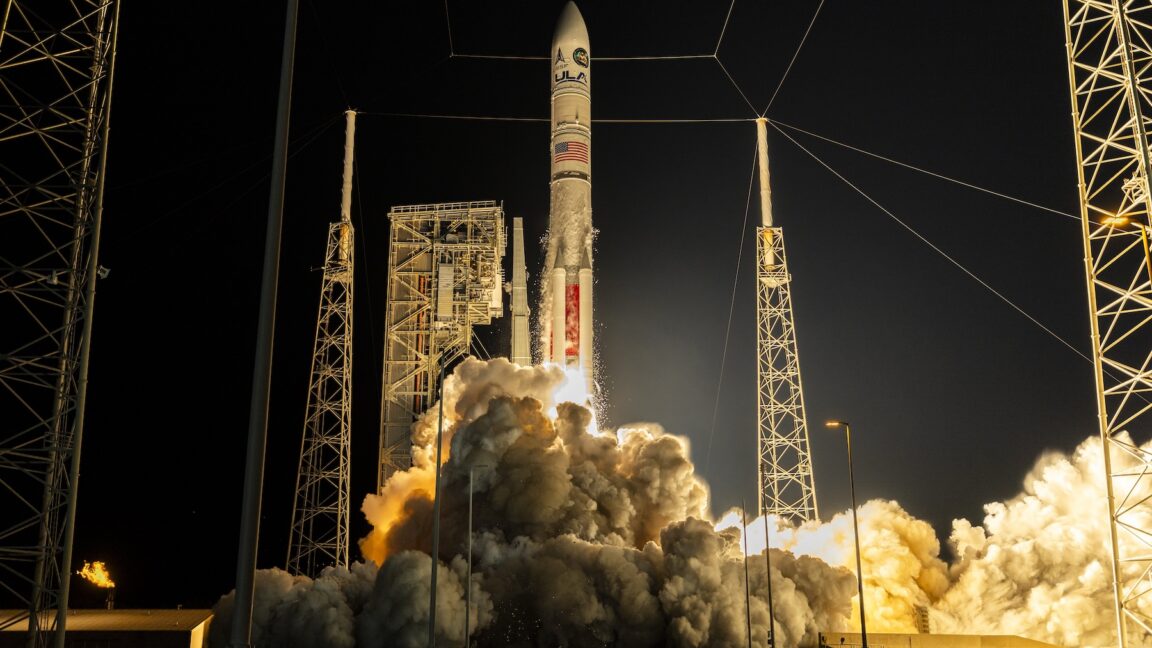
United Launch Alliance's third Vulcan rocket lifted off August 12, 2025, on a national security mission for the US Space Force. Credit: United Launch Alliance
Around this time last year, officials at United Launch Alliance projected 2025 would be their busiest year ever. Tory Bruno, ULA’s chief executive, told reporters the company would launch as many as 20 missions this year, with roughly an even split between the legacy Atlas V launcher and its replacement—the Vulcan rocket.
Now, it’s likely that ULA will close out 2025 with six flights—five with the Atlas V and just one with the Vulcan rocket the company is so eager accelerate into service. Six flights would make 2025 the busiest launch year for ULA since 2022, but it falls well short of the company’s forecast.
Last week, ULA announced its next launch is scheduled for December 15. An Atlas V will loft another batch of broadband satellites for the Amazon Leo network, formerly known as Project Kuiper, from Cape Canaveral Space Force Station, Florida. This will be ULA’s last launch of the year.
The Vulcan rocket’s sole launch this year occurred August 12, when it took off on a mission sponsored by the US Space Force. The rocket deployed an experimental military navigation satellite and at least one additional classified payload into orbit. This mission was the third flight of the Vulcan rocket, and its first national security mission after the Space Force formally certified ULA’s new launch vehicle.
United Launch Alliance is one of the Space Force’s two certified launch providers for the National Security Space Launch (NSSL) program and the military’s most critical space missions, delivering satellites to orbit for reconnaissance, navigation, communications, and early warning. SpaceX, the other provider, has launched its Falcon 9 rocket fleet 151 times so far this year, including six times for the Space Force’s NSSL program.
Concerns about the Vulcan rocket are nothing new at the Pentagon. In May 2024, the defense official then in charge of procuring space hardware wrote a letter to Boeing and Lockheed Martin—ULA’s corporate parents—outlining his concerns about the Vulcan rocket’s entry into service. “Currently there is military satellite capability sitting on the ground due to Vulcan delays,” wrote Frank Calvelli, the assistant secretary of the Air Force for space acquisition under the Biden administration.
A year-and-a-half later, the military still has satellites waiting to launch on Vulcan.
Great expectations
By the time of the launch in August, ULA had cut its forecast for 2025 to nine missions, but officials still expected more Vulcan flights before the end of the year. That is no longer the case. Now, the next two military missions booked to launch on Vulcan are scheduled for next year, according to a spokesperson for Space Systems Command. These missions will launch a pair of in-space reconnaissance satellites and a GPS navigation spacecraft.
Meanwhile, Amazon Leo is focusing on preparing for the next launch of 27 Internet satellites on the Atlas V next month and the network’s first launch on a European Ariane 6 rocket early next year. Amazon is in the early stages of building and launching more than 3,200 satellites to beam consumer-grade broadband connectivity around the world, a service intended to rival SpaceX’s Starlink network. Amazon has launched 153 operational satellites so far.
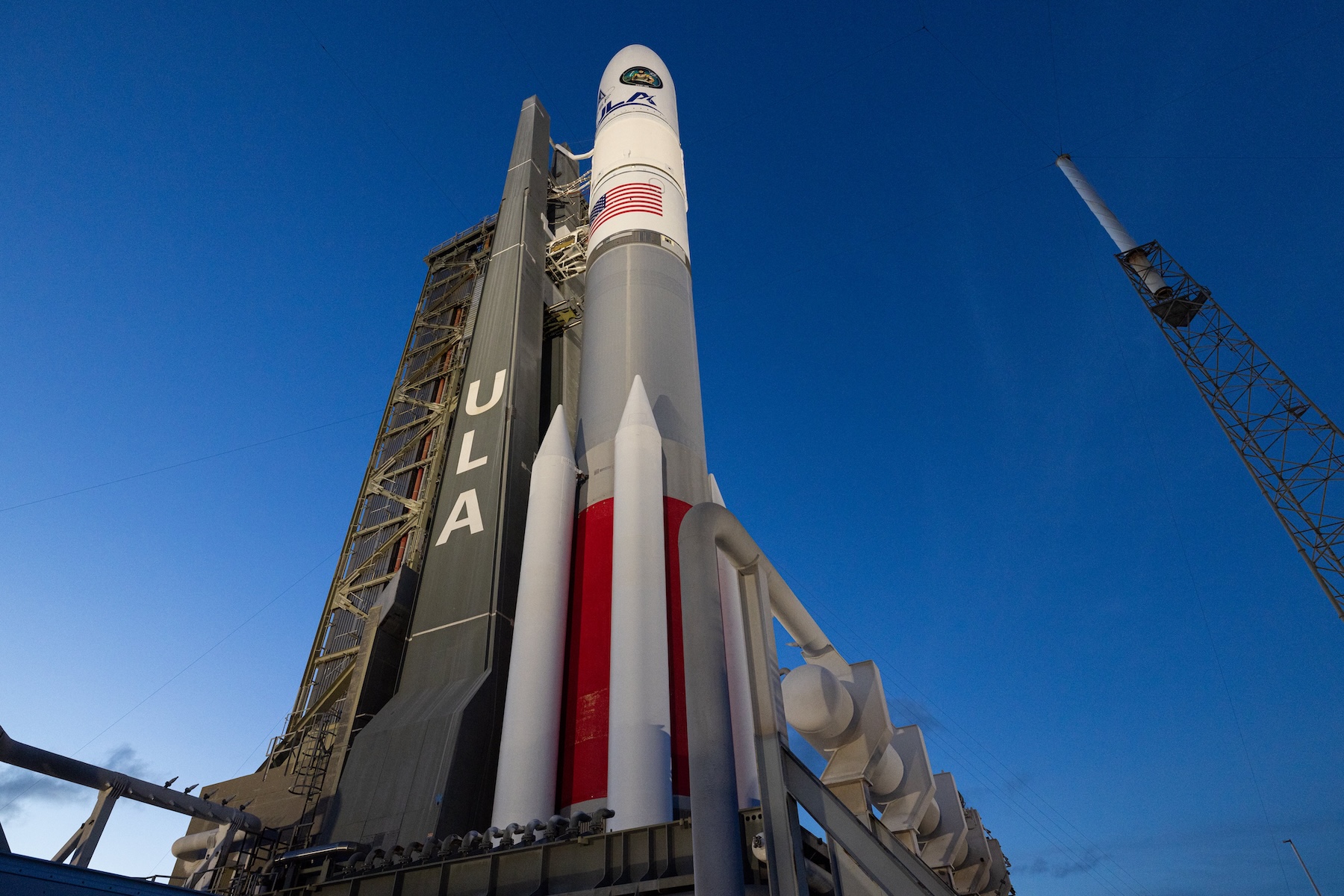
A Vulcan rocket stands on its launch pad at Cape Canaveral Space Force Station, Florida. Credit: United Launch Alliance
Amazon and the Space Force are ULA’s two primary customers, combining to make up about 90 percent of the company’s mission backlog. Amazon has reserved 38 launches on Vulcan rockets, plus five more flights on the soon-to-retire Atlas V. The Space Force, which also awards launch contracts for the National Reconnaissance Office’s spy satellites, currently has 27 launches booked on Vulcan rockets.
The Space Force’s upcoming missions on the Vulcan rocket will carry operational satellites, unlike the experimental payloads carried on the most recent Vulcan launch in August. The next military launch on Vulcan, designated USSF-87, will deploy two so-called GSSAP satellites designed to reconnoiter other objects, including classified Russian and Chinese satellites, in geosynchronous orbit. These are among the Space Force’s most precious satellites at a time when space surveillance is taking on greater importance.
The Vulcan rocket has been slow to ramp up after the malfunction of one of the rocket’s strap-on solid rocket boosters on its second test flight in October 2024. The rocket continued climbing into orbit after its liquid-fueled main engines compensated for the decline in thrust from the damaged booster.
Engineers traced the problem to a manufacturing defect in an insulator on the solid rocket motor, and telemetry data from all four boosters on the following flight in August exhibited “spot-on” performance, according to Bruno. But officials decided to recover the spent expendable motor casings from the Atlantic Ocean for inspections to confirm there were no other surprises or close calls.
The hangup delaying the next Vulcan launches isn’t in rocket production. ULA has hardware for multiple Vulcan rockets in storage at Cape Canaveral Space Force Station, Florida.
Instead, one key reason for Vulcan’s past delays has been the rocket’s performance, particularly its solid rocket boosters. It isn’t clear whether the latest delays are related to the readiness of the Space Force’s GSSAP satellites (the next GPS satellite to fly on Vulcan has been available for launch since 2022), the inspections of Vulcan’s solid rocket motors, or something else.
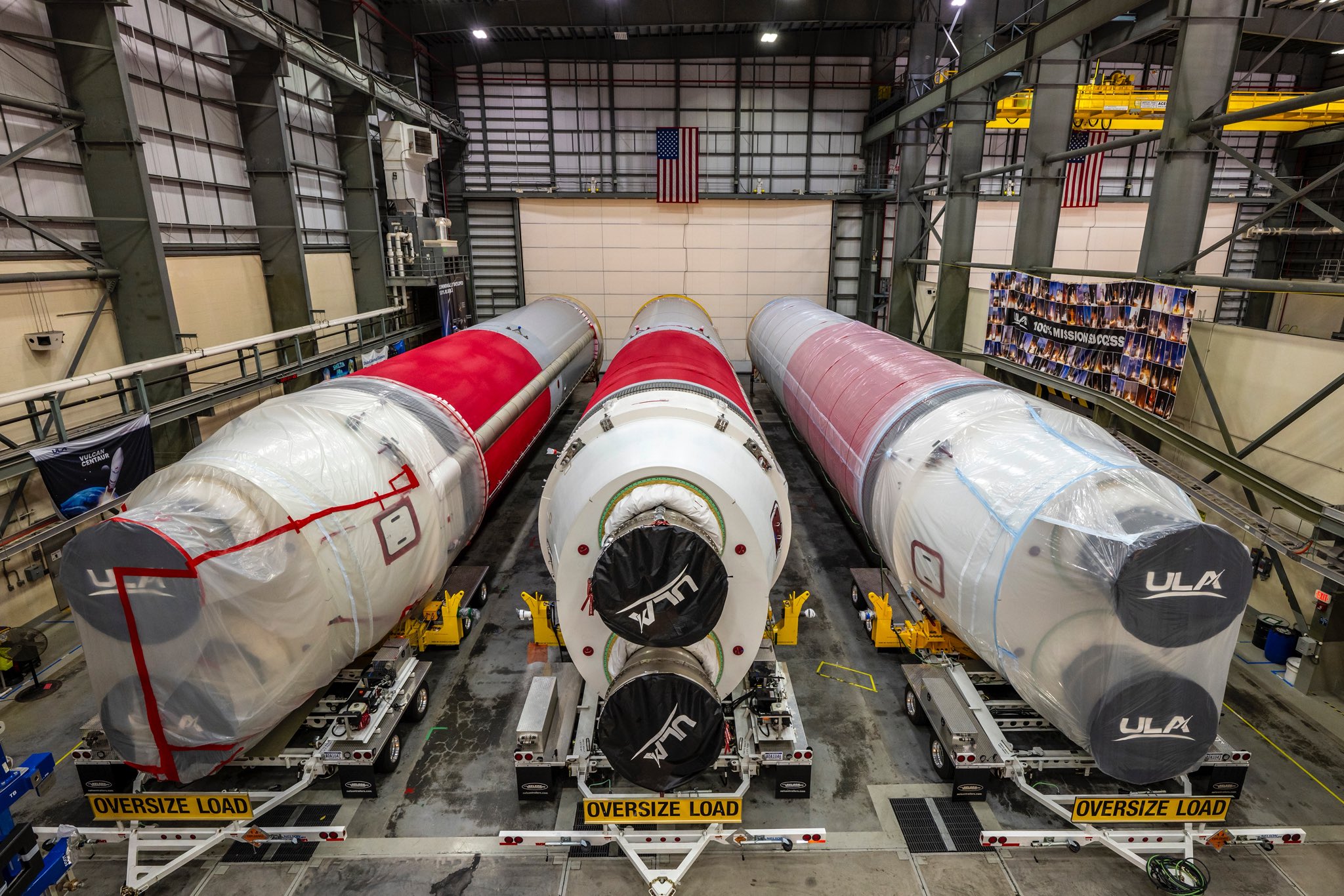
Vulcan booster cores in storage at Cape Canaveral Space Force Station, Florida. Credit: United Launch Alliance
A Space Systems Command spokesperson told Ars that “appropriate actions are being executed to ensure a successful USSF-87 mission … The teams analyze all hardware as well as available data from previous missions to evaluate space flight worthiness of future missions.”
The spokesperson did not provide a specific answer to a question from Ars about inspections on the solid rocket motors from the most recent Vulcan flight.
ULA’s outfitting of a new rocket assembly hangar and a second mobile launch platform for the Vulcan rocket at Cape Canaveral has also seen delays. With so many launches in its backlog, ULA needs capacity to stack and prepare at least two rockets in different buildings at the same time. Eventually, the company’s goal is to launch at an average clip of twice per month.
On Monday, ground crews at Cape Canaveral moved the second Vulcan launch platform to the company’s launch pad for fit checks and “initial technical testing.” This is a good sign that the company is moving closer to ramping up the Vulcan launch cadence, but it’s now clear it won’t happen this year.
Vulcan’s slow launch rate since its first flight in January 2024 is not unusual for new rockets. It took 28 months for SpaceX’s Falcon 9 and ULA’s Atlas V to reach their fourth flight, a timeline that the Vulcan vehicle will reach in May 2026.
The Delta IV rocket from ULA flew its fourth mission 25 months after debuting in 2002. Europe’s Ariane 6 rocket reached its fourth flight in 16 months, but it shares more in common with its predecessor than the others. SpaceX’s Starship also had a faster ramp-up, with its fourth test flight coming less than 14 months after the first.
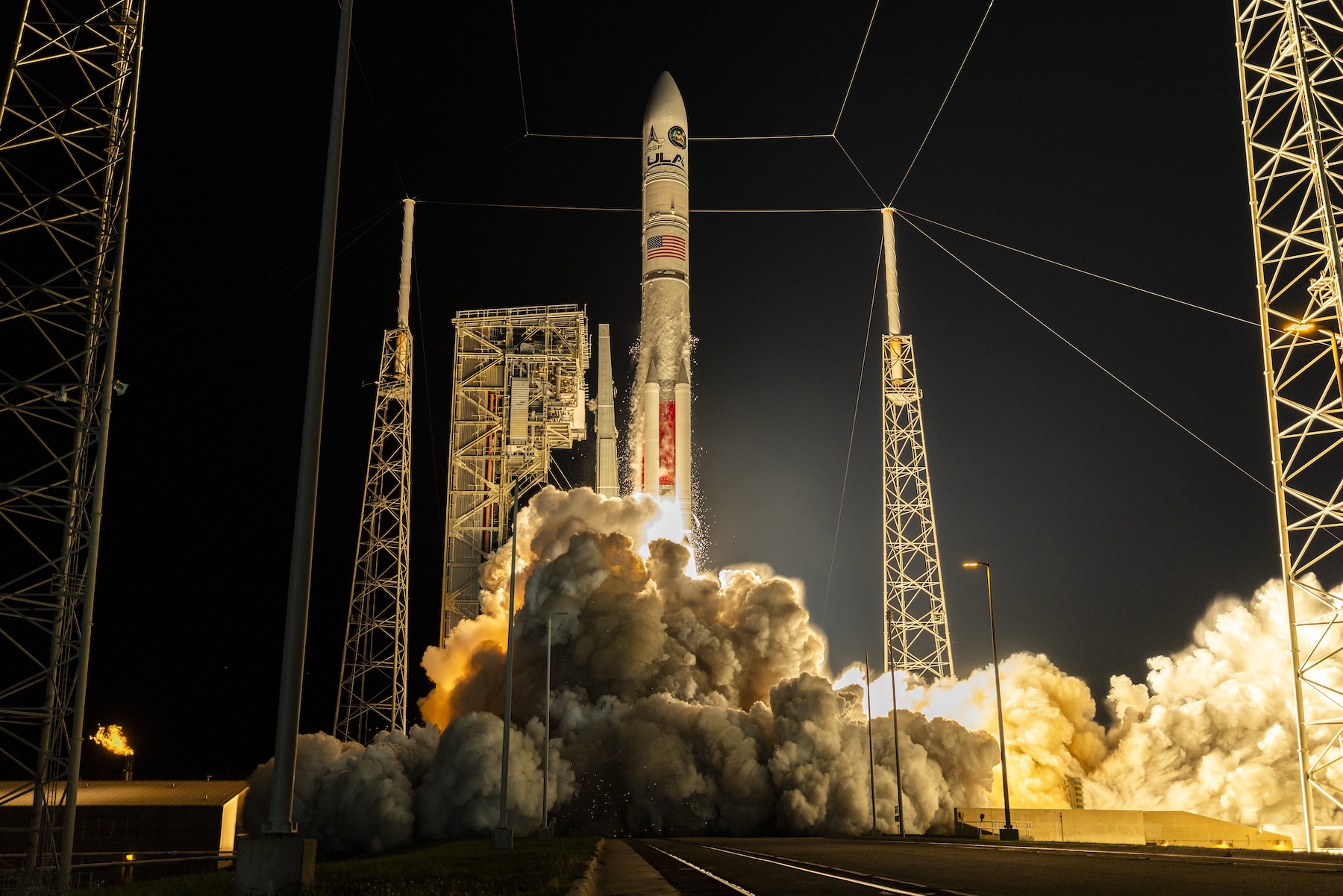
United Launch Alliance's third Vulcan rocket lifted off August 12, 2025, on a national security mission for the US Space Force. Credit: United Launch Alliance
Around this time last year, officials at United Launch Alliance projected 2025 would be their busiest year ever. Tory Bruno, ULA’s chief executive, told reporters the company would launch as many as 20 missions this year, with roughly an even split between the legacy Atlas V launcher and its replacement—the Vulcan rocket.
Now, it’s likely that ULA will close out 2025 with six flights—five with the Atlas V and just one with the Vulcan rocket the company is so eager accelerate into service. Six flights would make 2025 the busiest launch year for ULA since 2022, but it falls well short of the company’s forecast.
Last week, ULA announced its next launch is scheduled for December 15. An Atlas V will loft another batch of broadband satellites for the Amazon Leo network, formerly known as Project Kuiper, from Cape Canaveral Space Force Station, Florida. This will be ULA’s last launch of the year.
The Vulcan rocket’s sole launch this year occurred August 12, when it took off on a mission sponsored by the US Space Force. The rocket deployed an experimental military navigation satellite and at least one additional classified payload into orbit. This mission was the third flight of the Vulcan rocket, and its first national security mission after the Space Force formally certified ULA’s new launch vehicle.
United Launch Alliance is one of the Space Force’s two certified launch providers for the National Security Space Launch (NSSL) program and the military’s most critical space missions, delivering satellites to orbit for reconnaissance, navigation, communications, and early warning. SpaceX, the other provider, has launched its Falcon 9 rocket fleet 151 times so far this year, including six times for the Space Force’s NSSL program.
Concerns about the Vulcan rocket are nothing new at the Pentagon. In May 2024, the defense official then in charge of procuring space hardware wrote a letter to Boeing and Lockheed Martin—ULA’s corporate parents—outlining his concerns about the Vulcan rocket’s entry into service. “Currently there is military satellite capability sitting on the ground due to Vulcan delays,” wrote Frank Calvelli, the assistant secretary of the Air Force for space acquisition under the Biden administration.
A year-and-a-half later, the military still has satellites waiting to launch on Vulcan.
Great expectations
By the time of the launch in August, ULA had cut its forecast for 2025 to nine missions, but officials still expected more Vulcan flights before the end of the year. That is no longer the case. Now, the next two military missions booked to launch on Vulcan are scheduled for next year, according to a spokesperson for Space Systems Command. These missions will launch a pair of in-space reconnaissance satellites and a GPS navigation spacecraft.
Meanwhile, Amazon Leo is focusing on preparing for the next launch of 27 Internet satellites on the Atlas V next month and the network’s first launch on a European Ariane 6 rocket early next year. Amazon is in the early stages of building and launching more than 3,200 satellites to beam consumer-grade broadband connectivity around the world, a service intended to rival SpaceX’s Starlink network. Amazon has launched 153 operational satellites so far.
A Vulcan rocket stands on its launch pad at Cape Canaveral Space Force Station, Florida. Credit: United Launch Alliance
Amazon and the Space Force are ULA’s two primary customers, combining to make up about 90 percent of the company’s mission backlog. Amazon has reserved 38 launches on Vulcan rockets, plus five more flights on the soon-to-retire Atlas V. The Space Force, which also awards launch contracts for the National Reconnaissance Office’s spy satellites, currently has 27 launches booked on Vulcan rockets.
The Space Force’s upcoming missions on the Vulcan rocket will carry operational satellites, unlike the experimental payloads carried on the most recent Vulcan launch in August. The next military launch on Vulcan, designated USSF-87, will deploy two so-called GSSAP satellites designed to reconnoiter other objects, including classified Russian and Chinese satellites, in geosynchronous orbit. These are among the Space Force’s most precious satellites at a time when space surveillance is taking on greater importance.
The Vulcan rocket has been slow to ramp up after the malfunction of one of the rocket’s strap-on solid rocket boosters on its second test flight in October 2024. The rocket continued climbing into orbit after its liquid-fueled main engines compensated for the decline in thrust from the damaged booster.
Engineers traced the problem to a manufacturing defect in an insulator on the solid rocket motor, and telemetry data from all four boosters on the following flight in August exhibited “spot-on” performance, according to Bruno. But officials decided to recover the spent expendable motor casings from the Atlantic Ocean for inspections to confirm there were no other surprises or close calls.
The hangup delaying the next Vulcan launches isn’t in rocket production. ULA has hardware for multiple Vulcan rockets in storage at Cape Canaveral Space Force Station, Florida.
Instead, one key reason for Vulcan’s past delays has been the rocket’s performance, particularly its solid rocket boosters. It isn’t clear whether the latest delays are related to the readiness of the Space Force’s GSSAP satellites (the next GPS satellite to fly on Vulcan has been available for launch since 2022), the inspections of Vulcan’s solid rocket motors, or something else.
Vulcan booster cores in storage at Cape Canaveral Space Force Station, Florida. Credit: United Launch Alliance
A Space Systems Command spokesperson told Ars that “appropriate actions are being executed to ensure a successful USSF-87 mission … The teams analyze all hardware as well as available data from previous missions to evaluate space flight worthiness of future missions.”
The spokesperson did not provide a specific answer to a question from Ars about inspections on the solid rocket motors from the most recent Vulcan flight.
ULA’s outfitting of a new rocket assembly hangar and a second mobile launch platform for the Vulcan rocket at Cape Canaveral has also seen delays. With so many launches in its backlog, ULA needs capacity to stack and prepare at least two rockets in different buildings at the same time. Eventually, the company’s goal is to launch at an average clip of twice per month.
On Monday, ground crews at Cape Canaveral moved the second Vulcan launch platform to the company’s launch pad for fit checks and “initial technical testing.” This is a good sign that the company is moving closer to ramping up the Vulcan launch cadence, but it’s now clear it won’t happen this year.
Vulcan’s slow launch rate since its first flight in January 2024 is not unusual for new rockets. It took 28 months for SpaceX’s Falcon 9 and ULA’s Atlas V to reach their fourth flight, a timeline that the Vulcan vehicle will reach in May 2026.
The Delta IV rocket from ULA flew its fourth mission 25 months after debuting in 2002. Europe’s Ariane 6 rocket reached its fourth flight in 16 months, but it shares more in common with its predecessor than the others. SpaceX’s Starship also had a faster ramp-up, with its fourth test flight coming less than 14 months after the first.
